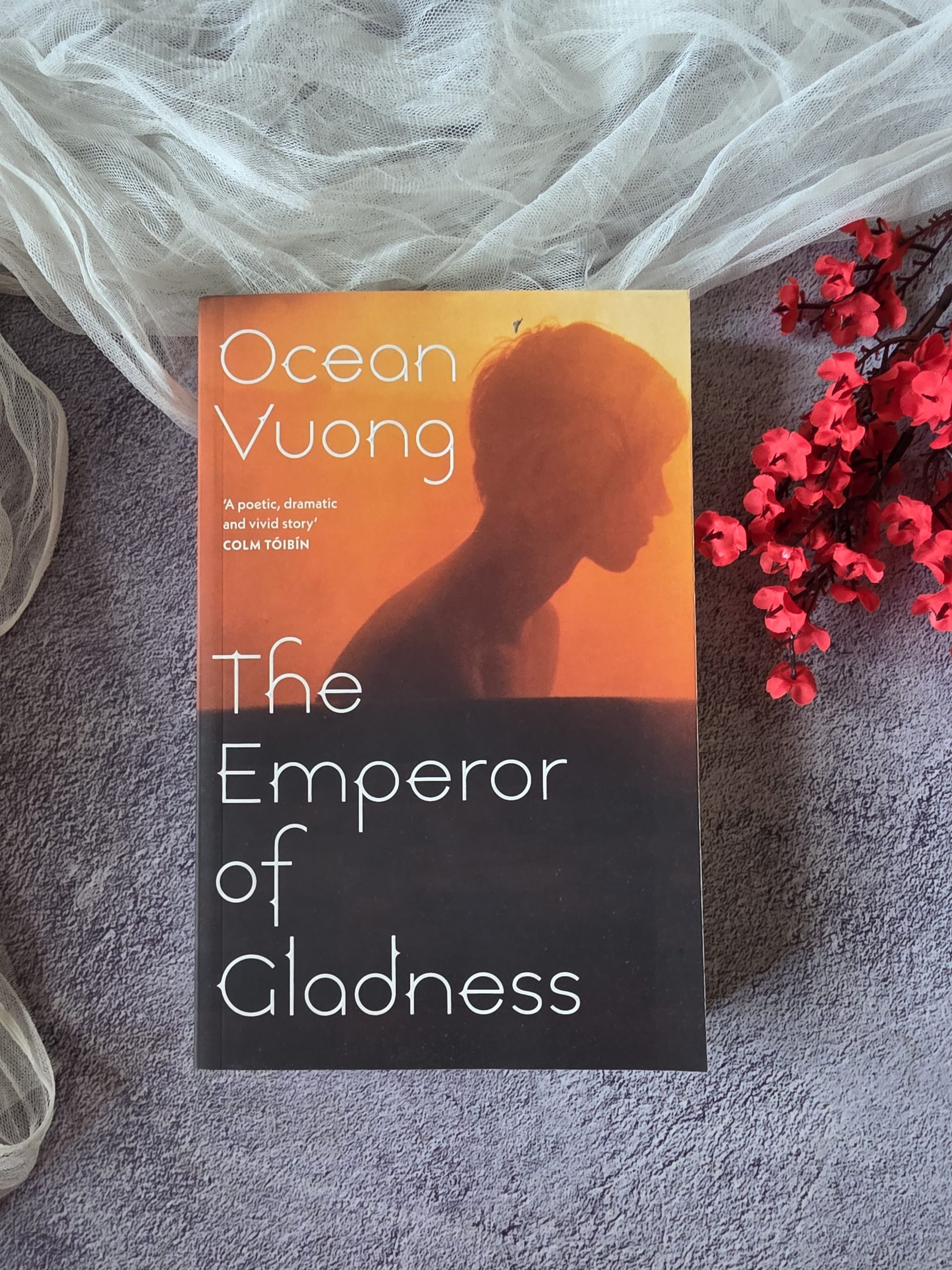
 Vuong has this uncanny ability to take the ugliest, most painful parts of being alive and render them with such tenderness that you can’t help but lean in, even when it hurts.
The novel opens with a moment that sets the tone for everything that follows: Grazina, an elderly Lithuanian widow, reaches out to Hai just as he’s contemplating suicide. It’s a small gesture, almost accidental, yet it becomes the hinge on which both of their lives turn. Hai, a young Vietnamese American man estranged from his family and himself, is drifting through East Gladness, working in a restaurant, numbing himself with pills, and trying to become the “emperor” of his own small domain. But as Vuong makes clear, mastery doesn’t equal happiness, and survival doesn’t always feel like living.
 Grazina’s dementia allows Vuong to slip between present-day mundanity and the horrors of her wartime memories. These scenes are some of the most powerful in the book—raw, disorienting, and deeply human. Through her recollections, Vuong exposes the ways people are marginalised, forgotten, or used up by systems that were never built to protect them. It’s a commentary on war, yes, but also on the quieter violences of poverty, illness, and loneliness.
One of the novel’s greatest strengths is its ensemble cast. Hai’s co-workers, Sony, BJ, Maureen, and the rest of the HomeMarket crew, form a makeshift family that is messy, chaotic, and full of heart. They’re the kind of characters who feel like people you’ve met in passing, people you’ve worked alongside, people you’ve overlooked. Vuong gives them all their moment, treating each with a motherly sort of care. Their kindness towards Hai is what slowly pulls him back into himself, reminding him that even the most ordinary lives deserve tenderness.
 The relationship between Hai and Grazina is the emotional core of the novel. It’s not a love story, but it is absolutely a story about love—the kind that grows out of shared loneliness, mutual need, and the simple act of listening. As Hai becomes Grazina’s caretaker, he begins to see value in his own existence. Their bond is fragile, imperfect, and utterly moving.
If I had one quibble, it’s that a few side plots felt slightly loose around the edges, but honestly, Vuong’s prose is so hypnotic that I didn’t mind lingering in the quieter moments.
Who Might Enjoy It
Readers who love character-driven fiction, poetic prose, and stories about found family, mental health, and the working poor will find so much to savour here. It’s a slow burn, but intentionally so, Vuong wants you to sit with every sentence.
The Final Word….
The Emperor of Gladness is a heartbreaking, hopeful, and exquisitely humane novel. It gives forgotten people the epic they deserve and reminds us that even in the bleakest corners of life, connection can be a lifeline. It’s a book that will stay with me for a long time.
With thanks to Penguin Random House SA.