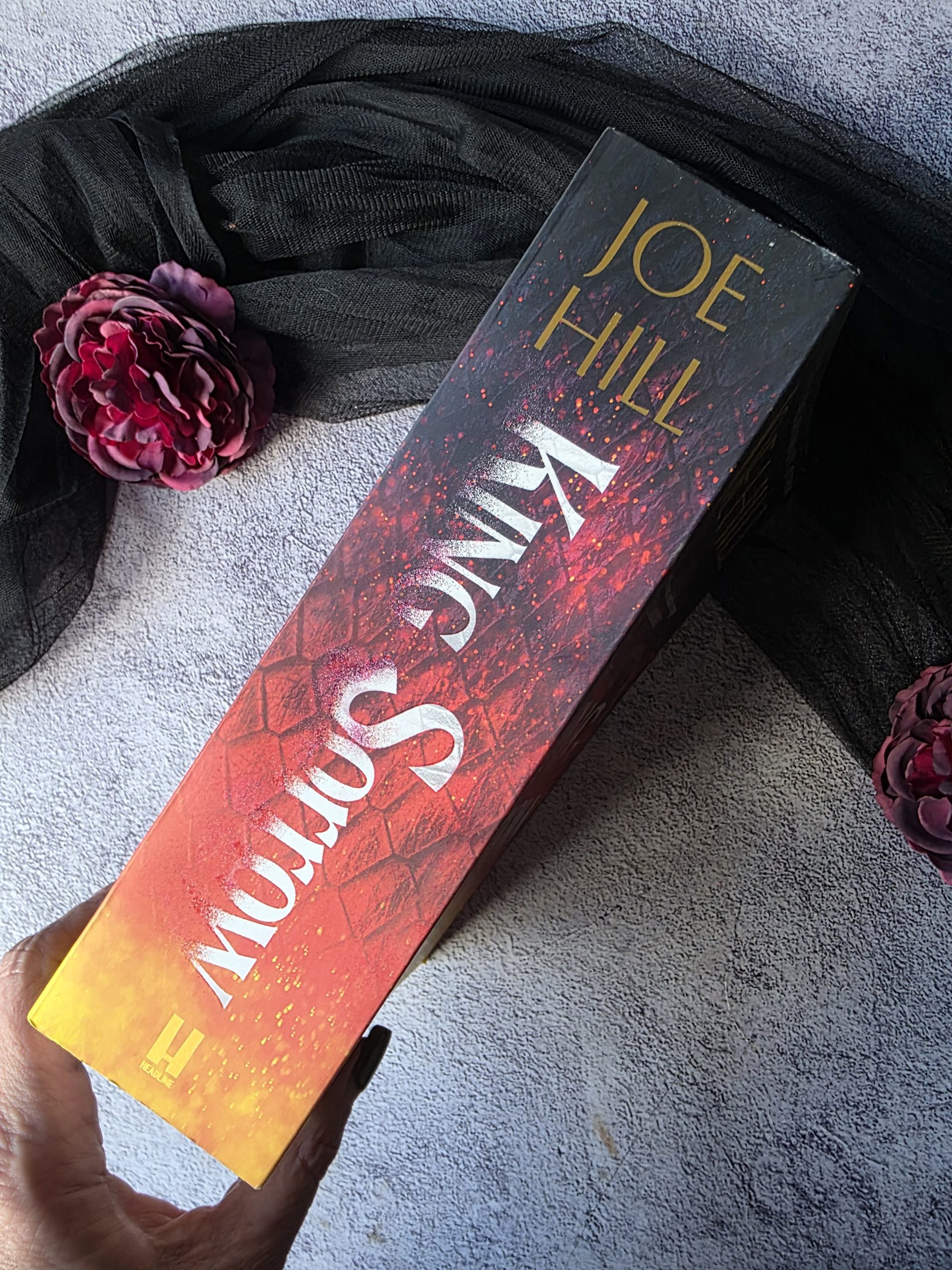
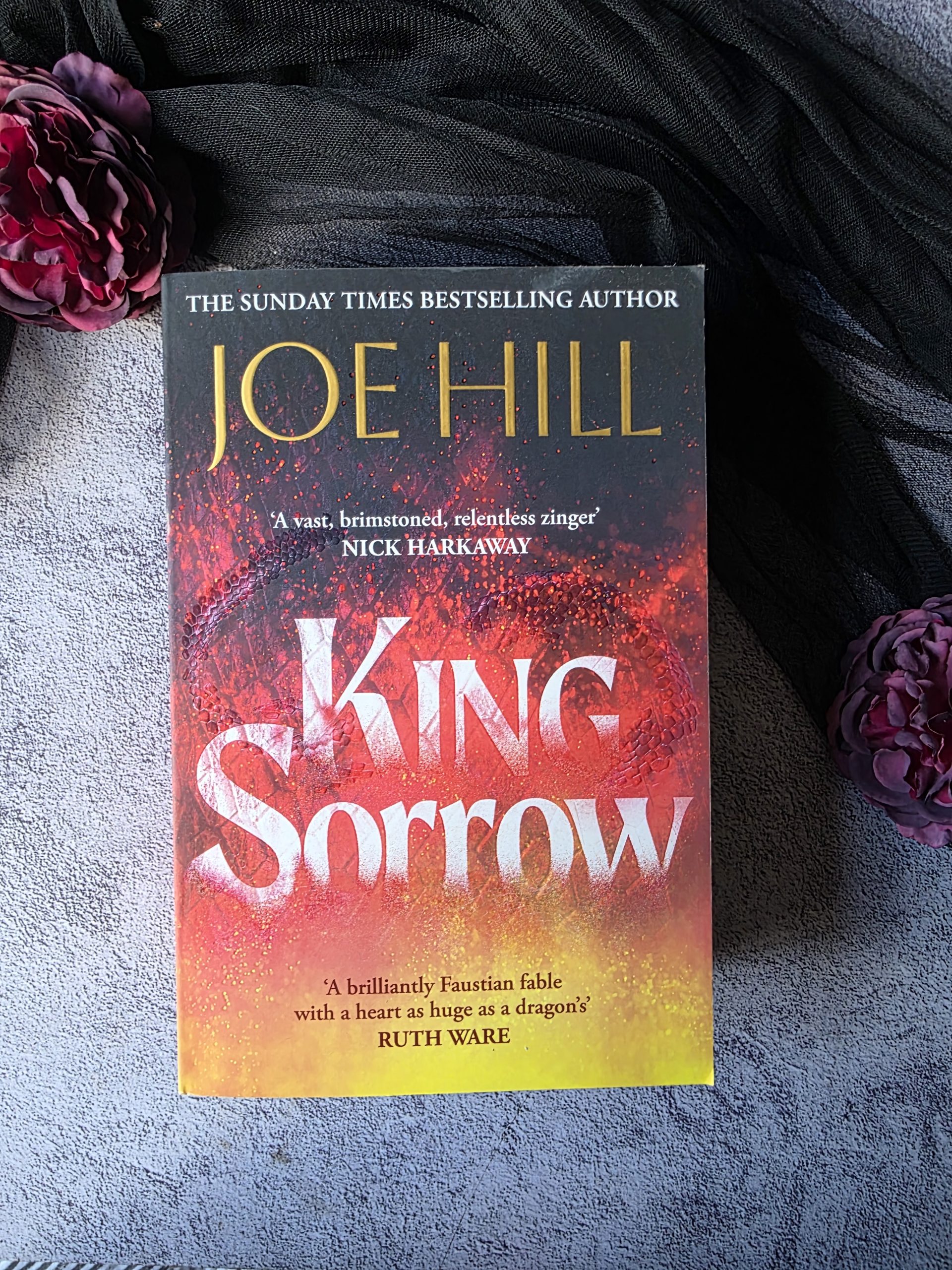
 Every so often a book comes along that completely consumes my attention and King Sorrow did exactly that. I picked it up expecting a dark fantasy with a dragon at its centre and instead found myself swept into a sprawling, emotionally charged story about justice, consequence and the fragile bonds between people. It is a huge novel in every sense, yet it never felt like a chore to read. If anything, I kept wishing for more.
The story begins in the 1980s with a group of college friends who make a terrible decision. In an attempt to protect one of their own from a violent drug dealer, they summon a dragon. It is a choice that haunts them for decades. What starts as a troubling moral dilemma quickly spirals into a disaster that crosses borders and generations. Hill moves the narrative through time with confidence, showing how one act of desperation can echo through the lives of everyone involved. The dragon itself, King Sorrow, is both a literal threat and a symbolic one. It becomes a study of how violence breeds more violence and how the pursuit of justice can twist into something unrecognisable.
 Thematically the book is rich. Hill asks uncomfortable questions about who justice is meant to serve and who ends up paying the price. There is a political undercurrent running through the entire story, but it never feels heavy handed. Instead it adds weight to the characters’ choices and highlights the way systems fail people long before monsters ever do. The blend of genres is impressive. At times it reads like dark academia, then slips into horror, then into a sweeping fantasy that still feels grounded in the real world. It is tragic, eerie and often heartbreakingly human.
What worked best for me was the character work. Arthur, Gwen, Donna, Van, Allie and Colin are flawed, contradictory and utterly compelling. My feelings towards them shifted constantly as the story unfolded. Their relationships are messy and believable, and the way Hill allows their perspectives to overlap and contradict each other gives the book a wonderful sense of depth. Even the side characters feel fully realised. The pacing does slow in places, especially in the middle, but I found that the quieter moments helped flesh out the world and made the later emotional blows land harder.
 Readers who enjoy genre blending stories, morally complex characters and long form narratives that reward patience will find a lot to love here. It is dark and often devastating, but also strangely beautiful. If you like your fantasy tinged with horror and your horror rooted in human frailty, this will be right up your alley.
King Sorrow is a bold, ambitious novel that explores the cost of justice through a fantastical lens without ever losing sight of the people at its heart. I could not put it down.
Thank you to Jonathan Ball Publishers for the opportunity to read this book!