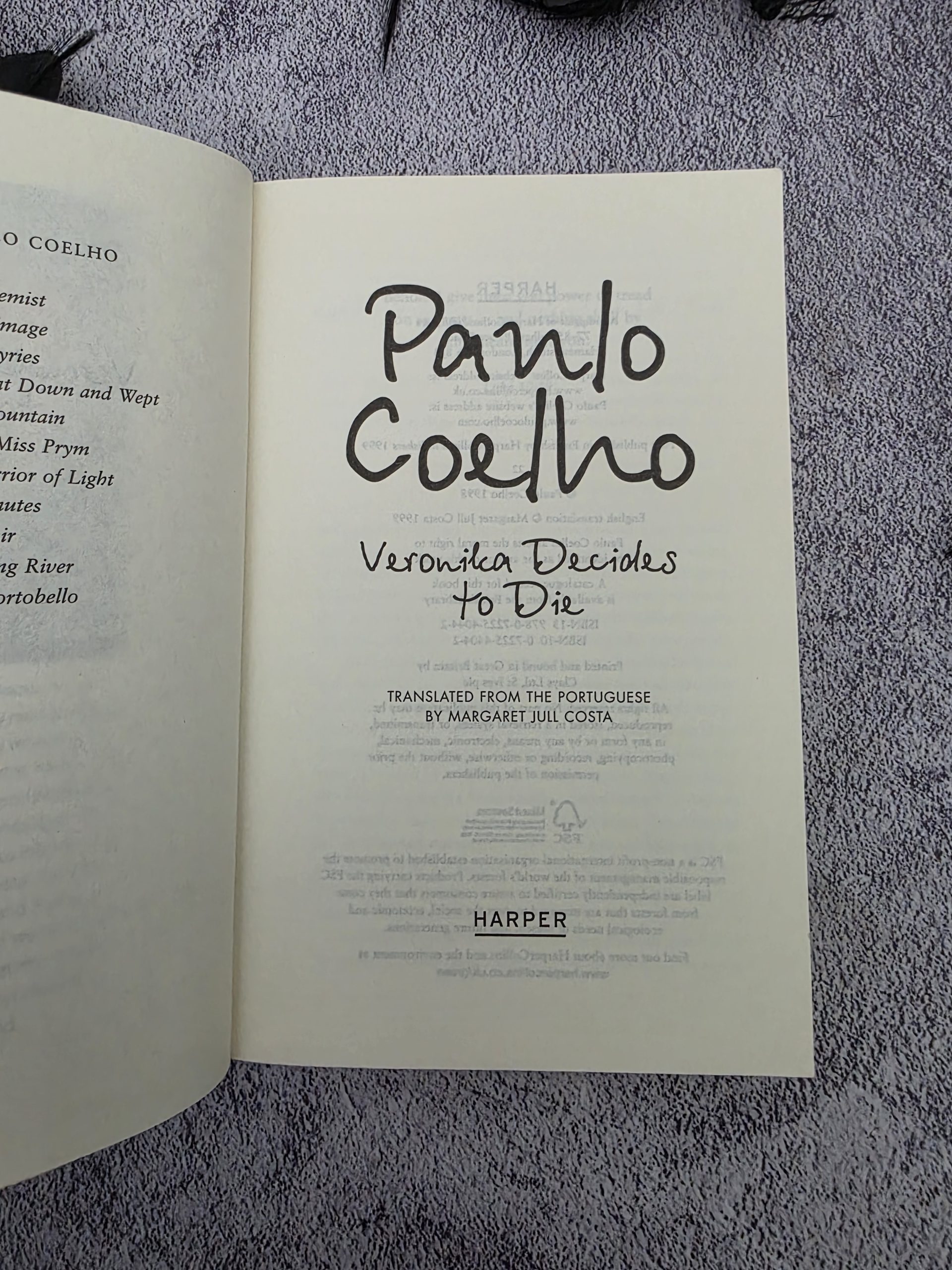
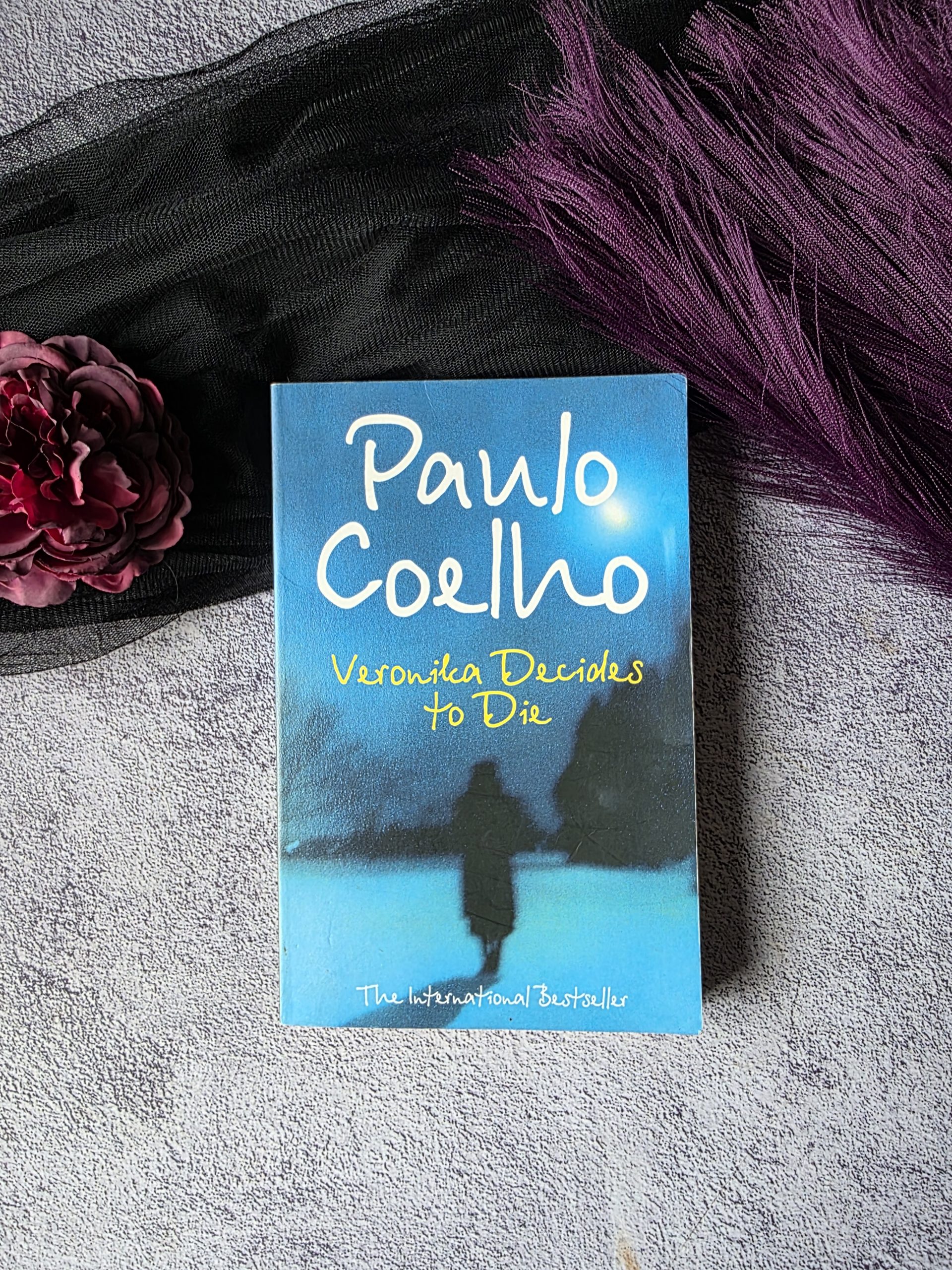
 Re‑reading Veronika Decides to Die after about fifteen years was a surprisingly different experience for me. I remembered it as a dark, philosophical little novel, but this time around I found it far less depressing than the title suggests. Thought‑provoking, yes. Heavy in places, absolutely. But also strangely hopeful, even when the subject matter is undeniably difficult.
The story opens with Veronika, a young woman in Slovenia who believes she has reached the end of what life can offer her. She quietly collects sleeping pills over several months and attempts to end her life. She survives, and wakes up in Villete, a mental institution, where she’s told that the attempt has irreparably damaged her heart and she has only days left to live. From here, the novel shifts into an exploration of what it means to truly live, and how the awareness of mortality can jolt someone into seeing the world differently.
 Alongside Veronika, we meet Mari, a lawyer living with severe anxiety, and Eduard, a man diagnosed with schizophrenia who longs for a life outside the expectations placed on him. These characters hit close to home for me in unexpected ways. Their struggles, fears, and desires felt painfully human, even when the book’s portrayal of mental health occasionally felt dated. It’s worth remembering that this novel was first published in 1998 and translated, so some of the language and framing reflects that era.
What Coelho does well, as always, is weave his own experiences into the narrative. I didn’t know until recently that he had been institutionalised as a young man, and that personal history gives the book a rawness that lingers beneath the more philosophical passages. The writing is fluid and easy to sink into, and despite the short length, I found myself connecting with the characters more than I expected.
 That said, there were moments that gave me the ick. The twist involving the doctor and Veronika’s “experiment” felt uncomfortable, even though it’s foreshadowed earlier. I also wished the ending had been a touch more complex, especially regarding Veronika and Eduard’s relationship. Still, the final quarter of the book landed beautifully for me. The themes crystallise, the emotional beats sharpen, and the message about appreciating life, really appreciating it, comes through with clarity.
At its core, this is a story about embracing difference, questioning what society calls “normal”, and finding meaning in unexpected places. Readers who enjoy Coelho’s blend of spirituality, introspection, and allegory will likely appreciate this one, even if it’s not as polished or relatable as some of his other works.
Veronika Decides to Die isn’t perfect, but it’s powerful. It’s blunt, sensitive, occasionally uneven, and deeply reflective. For me, it was a reminder that books can hit differently depending on where you are in life. If you’re a Coelho fan, or if you enjoy novels that blend philosophy with emotional storytelling, this one is definitely worth picking up again, or for the first time.
About the author: Paulo Coelho | Books, Facts, & The Alchemist | Britannica